Have you ever stepped away from a tricky problem, only to return later with a crystal-clear solution? Phrases like “mull it over” or “sleep on it” capture this experience perfectly. It’s not just folklore—it’s a well-documented psychological process known as the incubation effect. In this article, we’ll explore how the unconscious mind works behind the scenes to resolve challenges, drawing from personal anecdotes and scientific insights.
The Incubation Effect: Letting Ideas Simmer
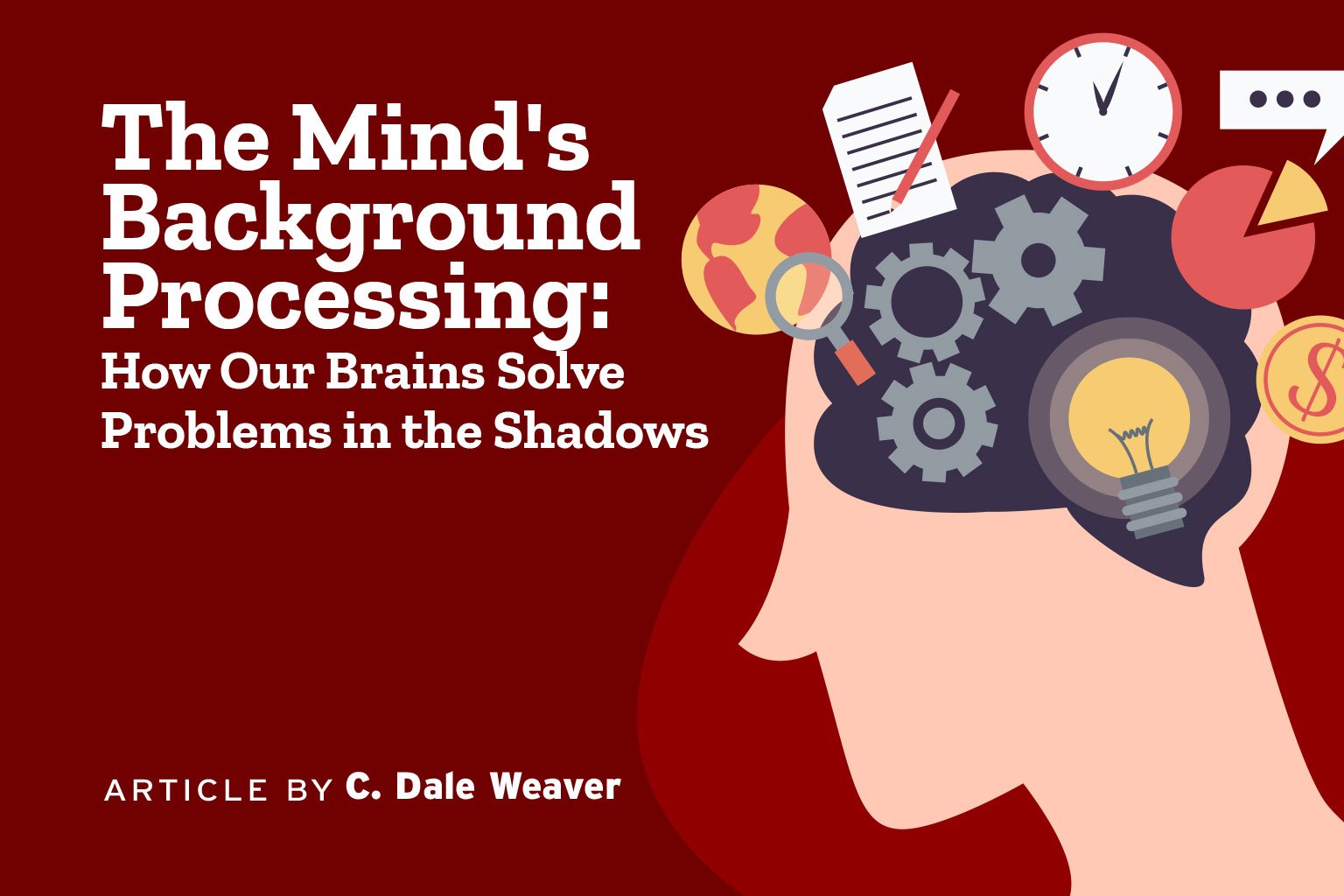
When a logical solution eludes us, taking a break—whether it’s lunch, a night’s sleep, or even a year-long hiatus—often leads to breakthroughs. This happens because our unconscious mind continues processing the problem in the background. The incubation effect refers to this period of rest or distraction that allows for unconscious mental work, leading to enhanced problem-solving, especially in creative or insight-based tasks.
During incubation, the brain forms remote associations, forgets unhelpful mental fixations, and integrates information subconsciously. Neurologically, it involves the default mode network, which activates during mind-wandering and rest, supporting creativity by deactivating rigid executive control areas. For extended periods, like revisiting a stalled software project after a year, accumulated knowledge and shifted perspectives play a role, reorganizing memories for clarity.
Empirical evidence supports this:
- A meta-analysis by Sio and Ormerod (2009) in Psychological Bulletin confirms incubation boosts divergent thinking.
- Research by Ritter and Dijksterhuis (2014) highlights the unconscious foundations via fMRI, showing default mode network involvement.
- Theories from Wallas (1926) and modern reviews discuss beneficial forgetting and implicit processes.
- Classic studies by Smith and Blankenship (1989) show breaks enable unconscious resolution.
Common Phrases That Capture the Process
Beyond “mull it over” and “sleep on it,” everyday language reflects this cognitive phenomenon:
- Let it simmer: Allowing gradual unconscious processing.
- Put it on the back burner: Setting aside for background work.
- Take a breather: Gaining fresh perspective through rest.
- Let it marinate: Ideas developing over time.
- Give it some space: Mental distance for insights.
- Chew on it: Slow mental digestion.
- Sit on it: Delaying for subconscious resolution.
These phrases align with incubation research, emphasizing breaks for unconscious progress.
The Role of Sleep: Waking Up with Solutions
Sleep amplifies incubation, particularly during REM stages, where memory consolidation and cognitive flexibility thrive. You might wake with ideas for problems you weren’t consciously pondering—thanks to the brain’s overnight integration of disparate information. REM activates areas like the hippocampus and prefrontal cortex, fostering novel connections and “aha” moments.
This explains spontaneous insights: subconscious priming from daily experiences surfaces during sleep’s diffuse processing. Studies show:
- Diekelmann and Born (2010) in Nature Reviews Neuroscience detail REM’s role in insight formation.
- Wagner et al. (2004) in Nature demonstrate sleep enhances complex problem-solving.
- Cai et al. (2009) in PNAS link REM to creative associations.
- Walker and Stickgold (2010) in Scientific American explain remote associations during sleep.
Morning Insights: The Power of Lingering in Bed
In retirement, without alarms, early wakings followed by dozing can yield ideas. This hypnopompic state—between sleep and full wakefulness—fosters creativity with relaxed prefrontal activity allowing free associations. Frequent dreaming indicates strong REM, priming morning breakthroughs.
Your routine maximizes this: no abrupt wake-ups preserve the liminal state, reducing stress for freer default mode network activity. Related phrases include “morning clarity” or “dawn inspiration.”
Supporting research:
- Horowitz et al. (2017) in Frontiers in Psychology on hypnagogic states for creativity.
- The aforementioned studies on REM and incubation.
To harness this, keep a bedside notebook for fleeting ideas. This process underscores the brain’s remarkable ability to solve problems unconsciously, turning downtime into innovation.